
Fake News
The Left Panicked Over a Giant Wall That Was NEVER EVEN HAPPENING!

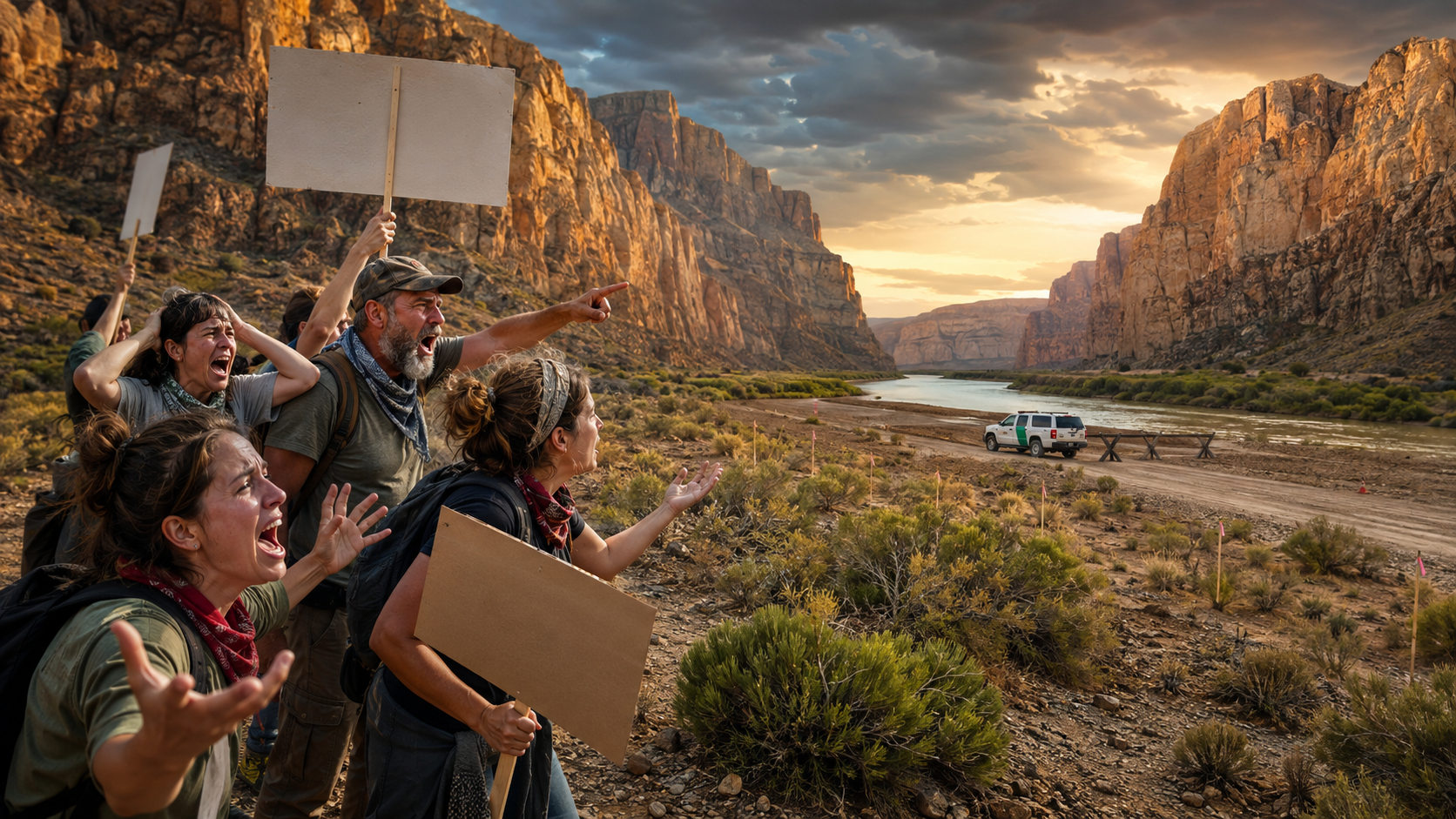
Activists gathered at Big Bend National Park to protest a 30-foot wall, stadium lighting, and the apparent bulldozing of one of America’s most beautiful landscapes.
There was one small problem: Customs and Border Protection says that is not the project being built.
CBP Commissioner Rodney Scott issued a statement Thursday attempting to correct the record about planned border-security work around Big Bend. According to the agency, there will be no 30-foot wall and no stadium lighting through the national or state parks.
The current plans call for one new access road, improvements to existing roads, detection technology, and vehicle barriers in strategic locations. CBP says activity mistaken for major construction was surveying and design work.
That is considerably less cinematic than “Trump bulldozes national park,” which is probably why the accurate version traveled more slowly.
Protesters gathered near Santa Elena Canyon chanting, “No road. No wall. No wire. No way.” It is part of the same anti-enforcement outrage cycle that has stopped persuading much of America. Texas Sen. John Cornyn had also pressed the Department of Homeland Security for details after local officials raised concerns about construction in terrain that already creates a natural barrier.
Those questions are reasonable. Big Bend is spectacular, environmentally sensitive, and enormous. CBP should be specific about locations, costs, and environmental impact before work advances.
And its statement still leaves some questions unanswered. The Daily Caller noted that CBP did not provide a map or explain exactly how much land the infrastructure would occupy.
But there is a large gap between asking the government for a detailed plan and rallying against a giant wall the government says it is not building. We have already seen how quickly activist opposition to immigration enforcement can escalate when dramatic claims outrun the facts.
CBP’s argument is straightforward: leaving a gap in border detection invites cartels to adjust their routes. The agency says the limited infrastructure is meant to prevent that without destroying the park Americans want protected.
That balance deserves scrutiny based on real plans, not the scariest rendering activists can conjure.
If CBP produces the maps and the project is more invasive than advertised, criticize it. Until then, protesting imaginary stadium lights in a canyon is less environmental stewardship and more community theater with hiking boots.