News
A YouTuber’s Abortion Confession Reveals the Ugly Truth

You have probably seen the post by now.
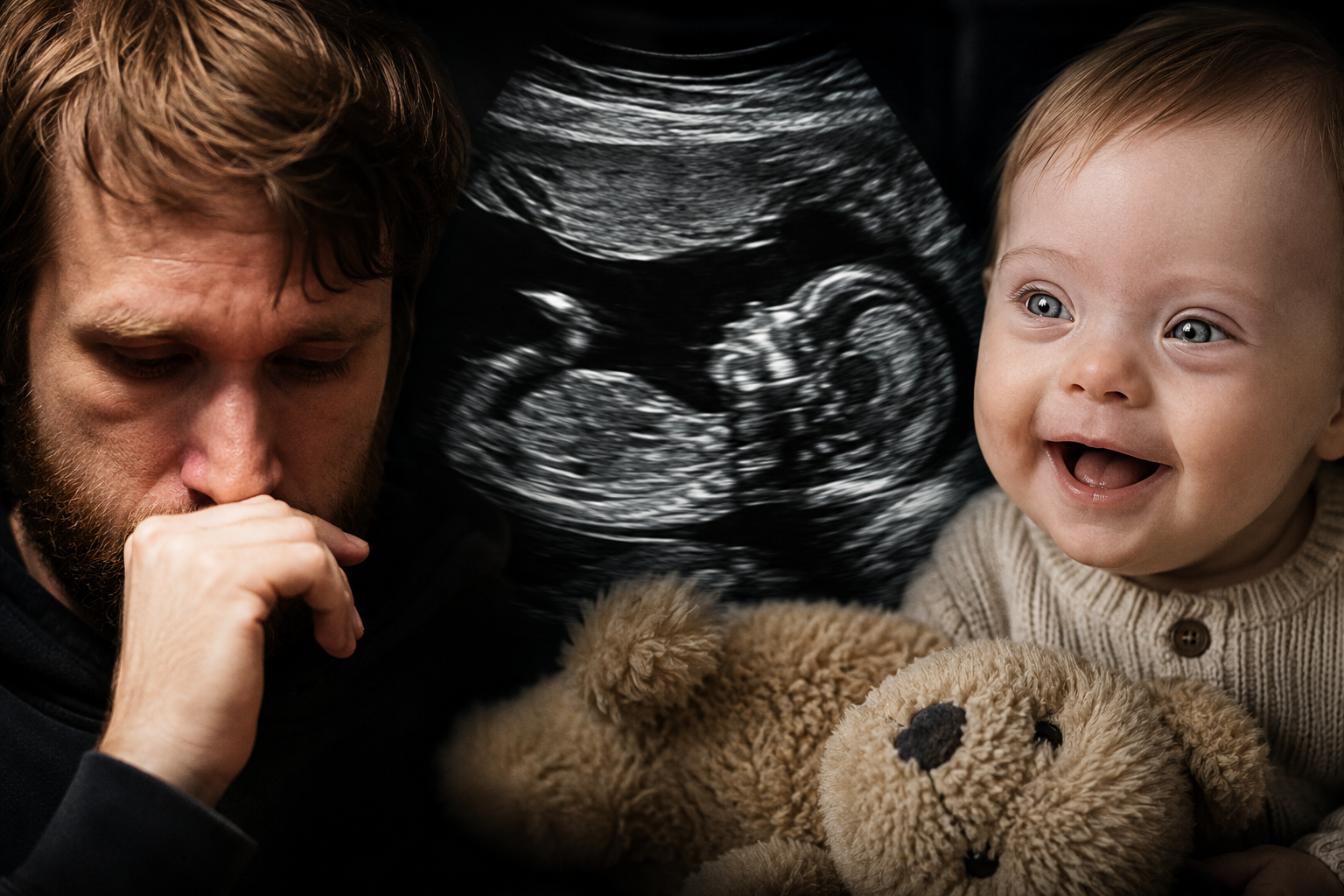
Jesse Ridgway, a popular YouTuber I had never heard of until this week, wrote a long public statement detailing the horrific decision he and his wife made to abort their baby after a Trisomy 21 diagnosis — Down syndrome. In the post, he described their fear, the medical complications doctors warned them about, and the way they were allegedly reassured that many families make the same choice. The entire message seemed designed to soften the truth of what happened: a baby was diagnosed with a disability, and their life was ended because of it.
I do not know Jesse Ridgway.
I do not know his wife. I do not know their family. I do not know the private conversations they had, the fear they felt, or the exact words spoken in a doctor’s office when they were given that diagnosis.
But I did read his post.
And I have not been able to stop thinking about it.
Not because it was shocking in the way evil is always shocking. Not because abortion is new. Not because our culture has not already accepted the lie that some children are better off dead than born.
I cannot stop thinking about it because of the way the message was packaged. The calmness. The explanation. The appeal for understanding. The strange implication that because doctors told them this happens all the time, it must somehow be fine. Normal. Nothing to be ashamed of.
But that is not how morality works.
If everyone does something terrible, it does not become less terrible. It becomes more terrifying.
The post was presented as a story of trauma and compassion. But underneath it was something much darker: the idea that a child’s suffering, or possible suffering, can justify ending his life.
That is the part I cannot get past.
We have become so spiritually sick that we now talk about death as mercy and birth as cruelty. We say a baby might suffer, so the compassionate thing is to make sure he never gets the chance to live. We say a diagnosis is tragic, and then we treat the child as the tragedy.
But a child with Down syndrome is not a tragedy.
A child with a heart defect is not a tragedy.
A child who may need surgeries, therapy, accommodations, patience, sacrifice, and love is not a tragedy.
A society that looks at that child and says, “Better not,” is the tragedy.
There is something especially chilling about the way prenatal testing has changed the abortion conversation. For years, abortion was sold as a desperate choice for women in crisis. It was framed around poverty, abandonment, youth, abuse, fear. But now we are watching abortion become something else entirely. Something colder. Something more selective.
Not “I cannot care for this child.”
But “this child is the wrong kind of child.”
This is where even some pro-choice people start to get uncomfortable, because everyone knows what it is. They may not want to say the word out loud, but we all know.
It is eugenics.
It is disability eugenics dressed up in therapeutic language.
And no amount of soft lighting, medical jargon, or Instagram vulnerability changes that.
When the child is unwanted because he is poor, they call it reproductive freedom. When the child is unwanted because she is disabled, they call it compassion. But in both cases, the child is the one who pays.
And in the case of Down syndrome, the numbers are horrifying. Children are screened, flagged, counseled against, and quietly erased before most of the world ever has to look them in the face. We are told this is progress. We are told it is choice. We are told it is responsible.
Responsible to whom?
Not to the baby.
Not to the disabled community.
Not to the families who love people with Down syndrome and know their lives are not defined by a diagnosis.
Not to the siblings, parents, teachers, nurses, friends, and communities who have been made better, softer, and more human because someone vulnerable was allowed to exist.
The entire logic depends on one hideous premise: that suffering makes a life less worthy.
And I reject that completely.
Suffering is a part of life. It is not the best part. It is not something we should romanticize or seek out. It is painful. It is unfair. It is heavy. Sometimes it is unbearable.
But a life with suffering is still a life.
That should not be controversial. And yet it feels increasingly radical to say.
We see this same lie everywhere now. We see it in the abortion industry. We see it in assisted suicide debates. We see it in the way doctors talk about “quality of life” as if they are accountants balancing a ledger instead of human beings standing before another human soul.
The message is always the same: if life will be hard, maybe death is kinder.
No.
Death is not kindness.
Abandonment is not mercy.
Calling someone a burden does not make killing them compassionate.
The answer to suffering is not elimination. It is love. It is presence. It is sacrifice. It is carrying each other’s burdens. It is building a world where the weak are protected, not discarded. It is telling scared parents that their child’s life still matters, even when the future looks different than the one they imagined.
Because that is the other thing that made me so angry: the suggestion that doctors, or society, or strangers on the internet can absolve this.
They cannot.
Doctors can give information. They can give statistics. They can explain risks, heart defects, complications, possibilities. They can say, “Many people choose this.”
But doctors do not get to define the value of a human life.
And the world does not have the authority to absolve sin.
We are living in a culture that desperately wants absolution without repentance. People want to do the unthinkable, post about it publicly, and be told they are brave. They want the comments section to function like a confessional. They want strangers to say, “You did the right thing,” because silence would be too heavy.
But sometimes guilt is not oppression.
Sometimes guilt is the soul telling the truth.
I know that sounds harsh. I know people want this conversation wrapped in softness. I know we are supposed to say “no shame” and “no judgment” and “you made the best decision for your family.”
But what about the baby?
What about the child who never got to be part of the family?
What about the child whose only crime was having an extra chromosome?
At some point, compassion for adults cannot require moral blindness toward children.
I can have sympathy for fear. I can understand panic. I can understand receiving devastating medical news and feeling like the floor has fallen out beneath you. I can understand being pressured by doctors, overwhelmed by statistics, and convinced there is only one humane option.
But I cannot call the killing of an innocent child humane.
I cannot pretend that ending a baby’s life because he may suffer is an act of love.
Love does not say, “You might be hard to care for, so you should not exist.”
Love says, “You are here. You are mine. We will face this together.”
That is the entire difference between a culture of life and a culture of death.
A culture of life does not deny suffering. It does not lie and say every story will be easy. It does not pretend every diagnosis ends in a miracle. It does not make sentimental promises that everything will be fine.
It simply insists that suffering does not erase dignity. Every life, regardless of disability, disease, or struggle, is inherently valuable. To suggest otherwise is the biggest insult to humanity.